Our Unit Converter
The ESI Unit converter allows you to quickly and easily access a conversion tool to work out your preferred unit of pressure measurement wherever you may be. Whether out on-site or in the office.

Download the ESI-USB© Software
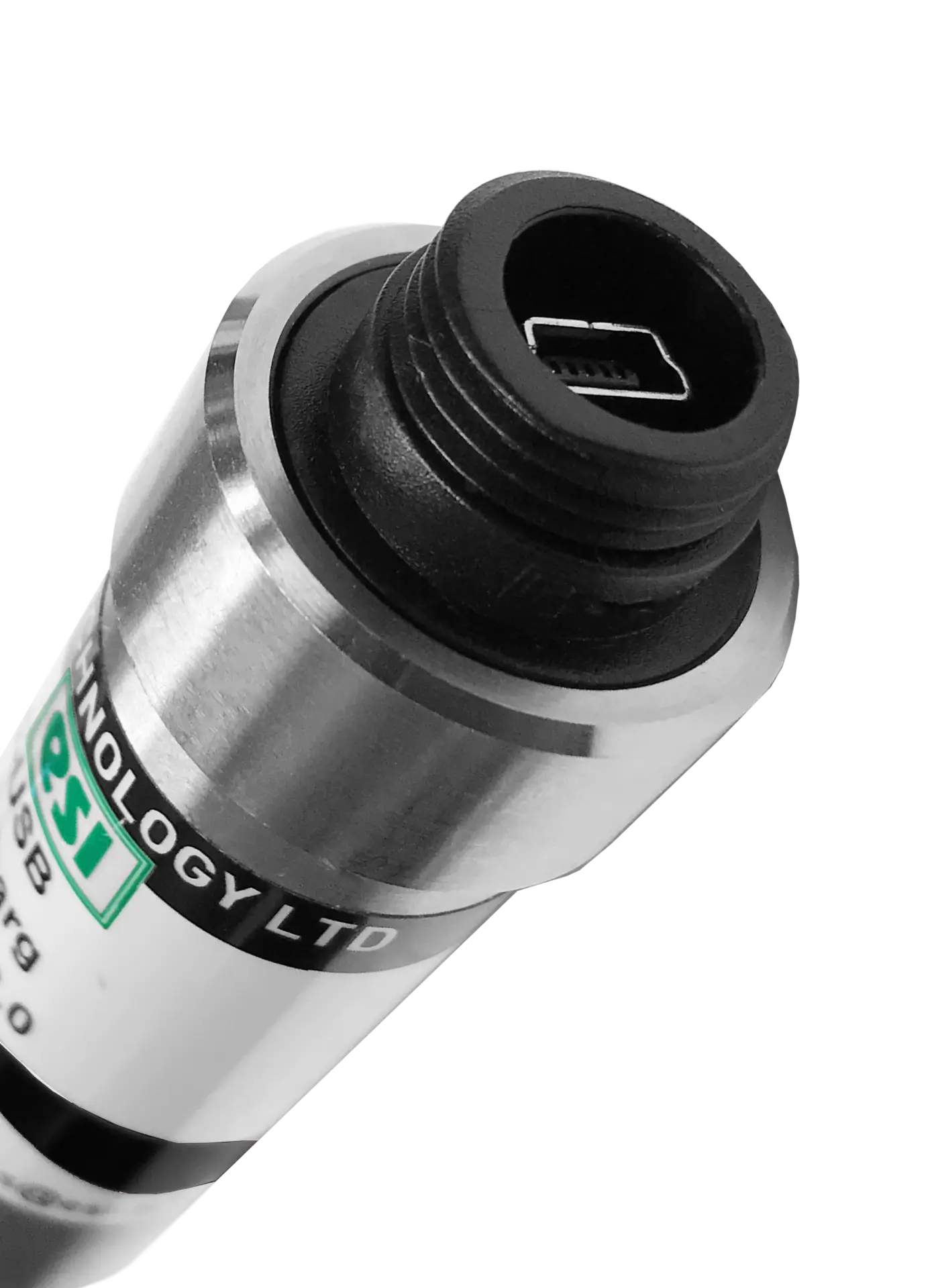
The ESI-USB© software allows you to connect your ESI transducer to your laptop or PC and be up and running monitoring pressure data within ten minutes. The software auto-updates and is compatible with Windows 8, 10 & 11.
 Downhole Pressure Measurement: What Makes It So Challenging?
 Downhole Pressure Measurement: What Makes It So Challenging?
Pressure measurement becomes more challenging as equipment moves deeper into a well.
Downhole tools can face high pressures, high temperatures and strong vibration. They may also experience rapid changes in pressure during drilling and well operations.
For this reason, standard pressure measurement solutions may not always be suitable.
Downhole pressure transmitters need to provide reliable measurements while working in a harsh environment. Their design, materials and sensing technology all matter.
What is downhole pressure measurement?
Downhole pressure measurement involves measuring pressure inside a well.
The measurement can be used during drilling, well testing and production operations. It can provide engineers with important information about conditions below the surface.
Pressure measurements can also help monitor the performance of downhole tools and equipment.
Depending on the application, engineers may need to measure pressure at different points within the well or inside a downhole tool.
Why is downhole pressure measurement challenging?
The environment inside a well can be very different from a typical industrial application.
As equipment moves deeper into a well, it can be exposed to:
- High pressure
- High temperatures
- Vibration
- Shock
- Pressure spikes
- Limited installation space
- Long operating periods
These conditions can affect pressure measurement.
A transmitter must therefore be designed for the environment in which it will operate.
 High pressure at depth
 High pressure at depth
Pressure generally increases as depth increases.
Downhole equipment can therefore experience pressures far above those found in many surface applications.
The pressure transmitter must have a suitable pressure range. It must also be able to withstand the pressures and changes it may experience during operation.
Pressure spikes are another consideration.
A transmitter that operates close to its maximum range may not be suitable if the system can experience sudden increases in pressure.
Engineers should consider both the normal operating pressure and the possible peak pressure when selecting a transmitter.
High temperature downhole
 High temperature downhole
Temperature is another major challenge.
Temperatures can rise significantly below the surface. The pressure transmitter must continue to operate within its specified temperature range.
Temperature can affect the behaviour of the sensing element and other components. It can also introduce measurement errors.
For downhole applications, temperature stability is therefore an important part of transmitter selection.
The transmitter must provide reliable measurements across the expected temperature range.
Vibration and shock
Downhole tools can experience significant mechanical stress.
Drilling creates vibration and shock. These forces can affect the equipment inside the tool.
A pressure transmitter used in this environment needs a robust construction.
The sensing technology also needs to provide stable measurements while exposed to these conditions.
Mechanical strength is therefore an important consideration when selecting a downhole pressure transmitter.
Pressure spikes and changing conditions
Downhole pressure does not always remain constant.
During drilling and other well operations, pressure can change quickly. Equipment can also experience pressure spikes.
These changes can provide useful information about what is happening in the well. However, they can also place additional demands on the pressure measurement system.
A suitable pressure transmitter needs to respond to changes while maintaining reliable measurement.
The pressure range and overload capability should also be considered during the specification process.
Why does sensor technology matter?
The sensing element is at the heart of a pressure transmitter.
Different sensor technologies have different characteristics. These can affect performance, stability and suitability for a particular application.
For downhole applications, engineers need to consider how the sensor will behave under high pressure, high temperature and mechanical stress.
Materials are also important.
The materials used within the pressure transmitter must be suitable for the environment and the media being measured.
A specialist application may therefore require a specialist sensor design.
Where are downhole pressure transmitters used?
Downhole pressure measurement can support a range of oil and gas applications.
These include:
Measurement while drilling
Measurement while drilling, or MWD, provides information while drilling is taking place.
Pressure measurement can form part of the data collected by the downhole tool.
Logging while drilling
Logging while drilling, or LWD, uses downhole tools to collect information about the formation during drilling.
Pressure is one of the measurements that may be required as part of the overall system.
Pressure while drilling
Pressure while drilling, or PWD, focuses on pressure measurement during drilling operations.
Reliable pressure data can help engineers understand downhole conditions while drilling continues.
Well integrity
Pressure measurement can also play a role in well integrity applications.
Monitoring pressure can help engineers understand conditions within a well and identify changes that may require further investigation.
What should you consider when choosing a downhole pressure transmitter?
Selecting a downhole pressure transmitter starts with understanding the application.
Several factors should be considered.
Pressure range
What is the normal operating pressure? What peak pressures could occur?
Temperature range
What temperatures will the transmitter experience during operation?
Sensor stability
Can the sensing technology provide stable measurements in the expected environment?
Mechanical strength
Can the transmitter withstand vibration and shock?
Materials
Are the materials suitable for the measured media and downhole environment?
Size and installation
Will the transmitter fit within the available space?
Electrical output
Is the output compatible with the downhole tool or measurement system?
Long-term performance
Can the transmitter provide reliable measurements throughout the required operating period?
These factors should be considered together. A transmitter with the correct pressure range may not be suitable if its temperature rating or construction does not match the application.
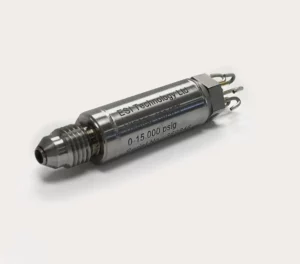
 The ESI HI5000 downhole pressure transmitter
 The ESI HI5000 downhole pressure transmitter
ESI Technology developed the HI5000 for high-pressure and high-temperature applications.
It is a compact pressure transmitter designed for demanding downhole environments.
The HI5000 is available for pressure ranges up to 2,000 bar. It uses specialist titanium alloy materials and is NACE approved for suitable applications.
Its compact design makes it suitable for integration into downhole tools where space can be limited.
The HI5000 can be used in applications including:
- Logging while drilling (LWD)
- Measurement while drilling (MWD)
- Pressure while drilling (PWD)
- Well integrity
- Lubricant monitoring in drill heads
Its design focuses on pressure measurement in environments where high pressure, high temperature and mechanical stress are part of the application.
Reliable pressure measurement below the surface
Downhole pressure measurement presents a unique set of challenges.
High pressure, high temperature, vibration and pressure changes can all affect measurement performance.
The right pressure transmitter needs to cope with these conditions while providing stable and reliable data.
At ESI Technology, we develop pressure measurement solutions for specialist applications across the oil and gas industry.
Our HI5000 downhole pressure transmitter combines a compact design with high-pressure and high-temperature capability. This makes it a suitable solution for a range of demanding downhole applications.
If you need a pressure measurement solution for a downhole application, our engineering team can help you identify the right specification for your requirements. Contact [email protected] or call +44(0)1978262255. Alternatively you can find your local dsitributor here