Our Unit Converter
The ESI Unit converter allows you to quickly and easily access a conversion tool to work out your preferred unit of pressure measurement wherever you may be. Whether out on-site or in the office.

Download the ESI-USB© Software
The ESI-USB© software allows you to connect your ESI transducer to your laptop or PC and be up and running monitoring pressure data within ten minutes. The software auto-updates and is compatible with Windows 8, 10 & 11.
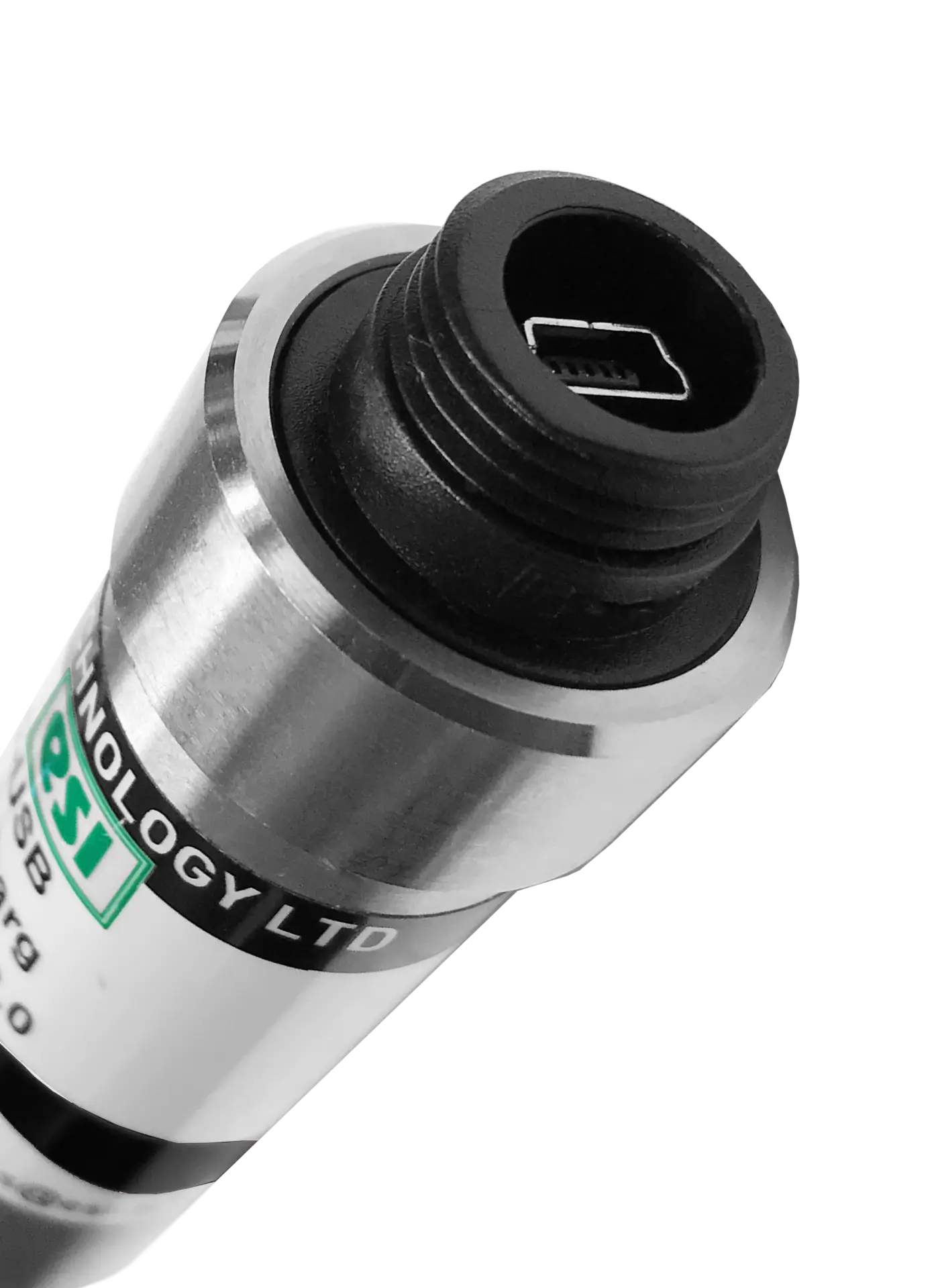
Signal Stability and Long-Term Accuracy in Downhole Pressure Transmitters
When pressure measurement takes place thousands of metres below the surface, downhole pressure transmitters must continue to provide accurate, stable data while exposed to high pressure, high temperature, vibration and corrosive fluids.
For operators, the challenge is not simply finding a pressure transmitter that can survive these conditions. It must also maintain signal stability and long-term accuracy throughout its service life.
This is where sensor technology, materials and construction become critical.
Why signal stability matters downhole
Pressure data provides valuable insight into what is happening inside a well. It can help operators monitor reservoir conditions, assess production performance, identify changes in well behaviour and support well integrity.
However, even a small amount of signal drift can affect the quality of this information.
A pressure transmitter that produces a stable signal gives engineers greater confidence in the data. This becomes particularly important for permanent downhole monitoring, where the transmitter may remain installed for extended periods and access for maintenance or recalibration can be extremely difficult.
Long-term signal stability can therefore help reduce uncertainty and support better decisions throughout the life of a well.
What causes pressure transmitter drift?
Pressure transmitter drift can result from several factors. Temperature is one of the most significant.
Downhole environments can expose sensors to sustained high temperatures, while pressure can reach very high levels. Mechanical shock and vibration can also place additional stress on the sensing element.
The surrounding media presents another challenge. Oil and gas wells can contain aggressive and corrosive fluids, making material selection essential for long-term reliability.
Over time, these conditions can affect the sensor, electronics or mechanical construction of a transmitter. The result may be a gradual change in the output signal, even when the actual pressure has remained stable.
For long-term downhole pressure measurement, minimising these effects is essential.
Silicon-on-Sapphire for stable pressure measurement
The sensing technology used inside a pressure transmitter has a major influence on its long-term performance.
ESI’s HI5000 Downhole Pressure Transmitter uses Silicon-on-Sapphire (SoS) sensor technology. The design combines a piezoresistive silicon strain gauge circuit with a sapphire diaphragm to create a highly robust sensing element.
Sapphire offers excellent mechanical strength and stability. The sensor element is also bonded to a titanium alloy sub-diaphragm, creating a strong structure capable of handling high pressure, shock and vibration.
One of the key advantages of Silicon-on-Sapphire technology is its excellent long-term stability across wid

e temperature ranges. The sensor also exhibits virtually no hysteresis, helping it provide consistent pressure measurement when conditions change.
For downhole applications, that combination of stability and durability is particularly valuable.
Maintaining accuracy at high temperature
Temperature can have a significant effect on pressure measurement. As downhole temperatures increase, sensor materials and electronics must continue to perform within their designed limits.
The HI5000 is designed for high-temperature applications up to 200°C. Its sensor technology is engineered to withstand high shock and vibration inputs while maintaining the accuracy and stability needed for downhole pressure monitoring.
This makes it suitable for demanding high-pressure, high-temperature environments where standard pressure transmitters may struggle to provide reliable long-term measurements.
Materials matter for long-term reliability
 A stable sensor is only part of the solution. The materials surrounding it must also withstand the environment.
Downhole equipment can encounter corrosive fluids and gases, including challenging sour-service conditions. The HI5000 uses NACE-certified materials to provide increased resistance in demanding oil and gas environments.
Its all-welded and sealed construction also helps protect the internal components from the surrounding environment. By reducing potential leak paths, the design supports reliable operation in high-pressure and corrosive applications.
Material selection and construction are therefore just as important as sensor technology when designing a pressure transmitter for long-term downhole deployment.
Compact design without compromising performance
Downhole tools have limited space. Every component needs to fit within a carefully designed system, often alongside other sensors and instrumentation.
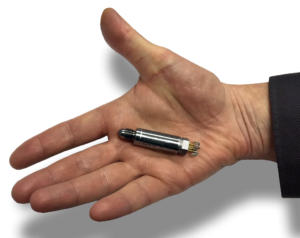 The HI5000 has a highly compact design, with a maximum length of around 57mm. This allows it to fit into confined downhole applications without sacrificing the robust construction needed for demanding conditions.
Its compact form factor, combined with high-pressure capability and high-temperature performance, makes it well suited to applications where space and environmental conditions are both challenging.
Accuracy that supports better downhole decisions
Stable pressure measurement is about more than producing a reliable electrical signal. It is about providing data that engineers can trust.
Accurate, repeatable pressure measurements can support:
- Reservoir monitoring and analysis
- Well integrity monitoring
- Production optimisation
- Permanent downhole monitoring systems
- Drill stem testing
- Enhanced oil recovery
- Geothermal well monitoring
- Exploration and appraisal
In these applications, pressure trends can provide important information about changes taking place within the well. Maintaining measurement accuracy over time helps ensure those trends reflect real changes in pressure rather than sensor drift.
Choosing a downhole pressure transmitter for long-term performance
When selecting a pressure transmitter for a downhole application, it is important to look beyond the initial accuracy specification.
Consider the full operating environment. What temperatures will the transmitter experience? What pressure range is required? Will it encounter corrosive fluids? How much shock and vibration will it experience? How long will it need to operate without access for maintenance?
The best solution needs to address all of these factors together.
A pressure transmitter with a stable sensing technology, suitable materials and robust construction can provide dependable performance long after installation.
The HI5000: engineered for demanding downhole applications
ESI Technology developed the HI5000 Downhole Pressure Transmitter specifically for applications where accuracy, stability and long-term performance are essential.
It combines Silicon-on-Sapphire sensor technology with NACE-certified materials and an all-welded, sealed construction. The transmitter is designed for temperatures up to 200°C and pressure ranges up to 2,000 bar.
Most importantly, its design focuses on maintaining reliable pressure measurement in the demanding conditions found downhole.
For applications where the pressure transmitter may be difficult or costly to access, choosing a sensor designed for long-term stability can make a significant difference.
Reliable pressure data, wherever the well takes you
Downhole pressure measurement leaves little room for uncertainty. Extreme temperature, pressure, vibration and corrosive environments can all challenge sensor performance.
By combining robust construction with Silicon-on-Sapphire technology, the HI5000 provides a stable and durable solution for long-term downhole pressure monitoring.
When the sensor is deep below the surface, signal stability is more than a specification. It is confidence in the data.
Learn more about the HI5000 Downhole Pressure Transmitter
If you’d like to discuss price and delivery time, please contact our sales team [email protected] call +44(0)1978 262255 or find your local distributor here