Our Unit Converter
The ESI Unit converter allows you to quickly and easily access a conversion tool to work out your preferred unit of pressure measurement wherever you may be. Whether out on-site or in the office.

Download the ESI-USB© Software
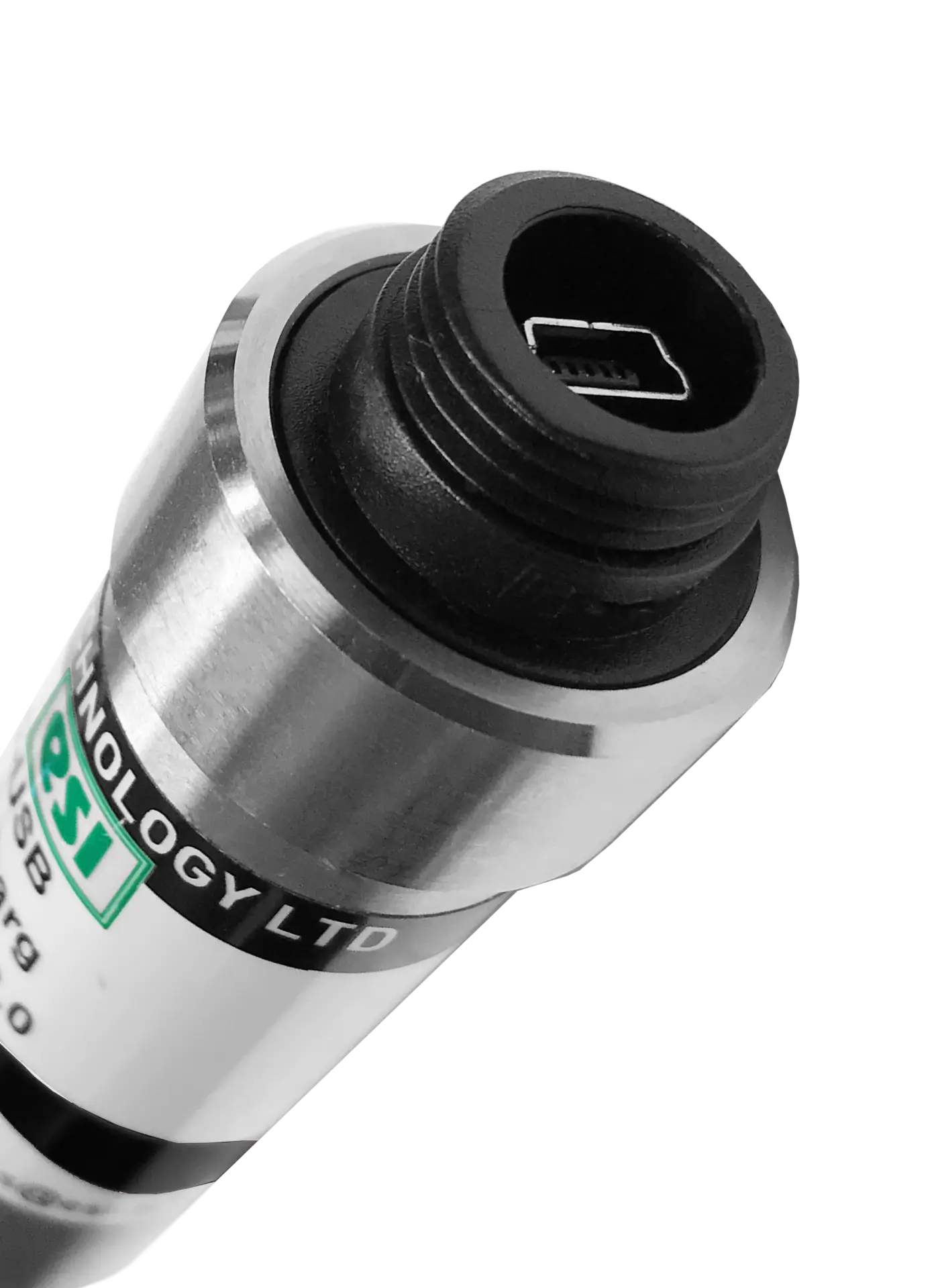
The ESI-USB© software allows you to connect your ESI transducer to your laptop or PC and be up and running monitoring pressure data within ten minutes. The software auto-updates and is compatible with Windows 8, 10 & 11.
Pressure Transmitter Selection: Why Media Compatibility Matters
Choosing a pressure transmitter is not just about finding the right pressure range.
The medium being measured matters too.
Water, oil, gas, hydrogen and chemicals can all behave differently. They can also interact with the materials inside a pressure transmitter in different ways.
A transmitter that works well with one medium may not be suitable for another.
So, before choosing a pressure transmitter, it is important to ask a simple question:
What exactly will the transmitter be measuring?
Why does the medium matter?
The medium comes into direct or indirect contact with parts of the pressure transmitter.
This can include the pressure port, diaphragm, seals and other wetted materials. These materials must be compatible with the medium.
If they are not, several problems can occur.
The medium could cause corrosion or damage to the materials. It could also affect the seals or sensing element. Over time, this can lead to measurement errors or transmitter failure.
The physical properties of the medium can matter too.
For example, a liquid and a gas may behave very differently under pressure. A dirty or viscous fluid can also create different challenges from a clean, low-viscosity liquid.
That is why media compatibility should be part of the specification process from the start.
 Measuring water
 Measuring water
Water is one of the most common media for pressure measurement.
Pressure transmitters are used in applications such as:
- Water treatment
- Pump systems
- Water supply
- Irrigation
- Tank monitoring
- Submersible applications
- Level measurement
Although water may seem straightforward, the application still needs careful consideration.
For example, a transmitter used underwater may need to withstand continuous immersion. A transmitter measuring water level may also need the correct pressure reference and cable configuration.
The water itself can also contain contaminants or chemicals. This means that material compatibility still matters.
For level applications, the specific gravity of the liquid is important too. Specific gravity describes the density of a liquid compared with water. A change in density changes the relationship between liquid height and hydrostatic pressure.
 Measuring oil and hydraulic fluids
 Measuring oil and hydraulic fluids
Oil and hydraulic fluids are common in industrial and mobile equipment.
Pressure measurement in these systems can help monitor hydraulic circuits, pumps, actuators and other equipment.
These applications can also involve pressure spikes, vibration and rapid pressure changes.
The transmitter therefore needs to cope with more than the normal operating pressure.
The pressure range, overpressure capability, response time and mechanical construction all need consideration.
The type of oil or hydraulic fluid matters as well. Different fluids can have different chemical properties, so the transmitter’s wetted materials must be compatible with the specific medium.
 Measuring gases
 Measuring gases
Pressure measurement in gases brings its own considerations.
Gases can be measured in applications ranging from industrial processes and compressed air systems to gas storage and testing equipment.
The transmitter still needs to be compatible with the gas. However, other factors may also influence the specification.
For example, the operating pressure and temperature can affect the choice of transmitter. The gas may also be corrosive or reactive.
In some applications, the pressure reference is important too.
An absolute pressure transmitter measures pressure relative to a vacuum. A gauge pressure transmitter measures pressure relative to atmospheric pressure.
The correct reference depends on what the application needs to measure.
 Hydrogen needs special consideration
 Hydrogen needs special consideration
Hydrogen is a particularly interesting medium for pressure measurement.
Hydrogen molecules are extremely small. Under certain conditions, hydrogen can interact with materials used in pressure equipment. Material selection therefore becomes especially important.
Hydrogen applications can also involve high pressures and changing temperatures.
Pressure transmitters used in hydrogen systems need to be designed and specified with these conditions in mind.
At ESI, we offer pressure measurement solutions for hydrogen applications. Our hydrogen-compatible products are designed for applications where material compatibility and pressure measurement performance are important.
Measuring aggressive chemicals
Some applications involve corrosive or chemically aggressive media.
In these cases, choosing the right material is critical.
A material that performs well with water may not perform well with a particular chemical. The concentration and temperature of the medium can also affect compatibility.
This means that simply specifying a pressure transmitter with a particular pressure range is not enough.
The engineer also needs to know what the transmitter will be exposed to.
Depending on the application, the pressure connection, diaphragm and other wetted parts may need specific materials.
What about dirty or viscous fluids?
Not every medium is clean and easy to measure.
Slurries, sludge and other fluids containing particles can create additional challenges.
Particles can collect around the pressure connection or diaphragm. Viscous fluids can also affect how pressure reaches the sensing element.
For these applications, the physical design of the pressure transmitter becomes important.
A flush diaphragm can help in applications where a conventional pressure port could become blocked or contaminated.
ESI offers flush diaphragm pressure transmitters for applications where the process medium makes a standard pressure connection unsuitable.
Temperature changes everything
The medium is not the only consideration.
Its temperature can also affect the suitability of a pressure transmitter.
High temperatures can affect the sensing element, electronics, seals and other materials. Some media can also become more aggressive at higher temperatures.
For example, a material that is suitable for a chemical at room temperature may behave differently when the temperature increases.
This is why pressure transmitter specifications include an operating temperature range.
It is important to consider both the ambient temperature around the transmitter and the process temperature of the medium.
Don’t forget pressure spikes
The medium can also influence how pressure behaves within a system.
Pumps, valves and hydraulic equipment can create sudden pressure changes. These are often called pressure spikes or pressure transients.
A transmitter may normally operate within its specified pressure range but still experience short periods of much higher pressure.
The transmitter therefore needs suitable overpressure capability for the application.
Understanding how the medium moves through the system can help engineers identify these conditions before selecting the transmitter.
The pressure connection matters too
The connection between the transmitter and the process is another important consideration.
Different applications may require different process connections, materials or diaphragm designs.
For example, a standard threaded pressure port may work well for a clean fluid. A flush diaphragm may be more suitable for a viscous or contaminated medium.
The installation environment also matters.
A transmitter used in a laboratory may have very different requirements from one installed on outdoor industrial equipment or subsea machinery.
A simple checklist for choosing a pressure transmitter
Before selecting a pressure transmitter, consider these questions:
1. What is the medium?
Water, oil, gas, hydrogen, chemicals or something else?
2. Is the medium clean?
Could particles, sludge or other contaminants affect the pressure connection?
3. What is the operating pressure?
Consider both normal pressure and possible pressure spikes.
4. What is the process temperature?
Check the temperature of the medium, not just the surrounding environment.
5. Which materials are compatible?
Check the wetted materials against the medium and its concentration.
6. What pressure reference is required?
Gauge, absolute or differential pressure may be appropriate depending on the application.
7. What type of pressure connection is needed?
The connection should suit both the process and the medium.
8. Are there any environmental requirements?
Consider vibration, moisture, corrosion and hazardous areas.
9. What output is required?
The transmitter needs to communicate with the equipment receiving the pressure signal.
10. Are there any relevant certifications?
ATEX, IECEx, DNV and other approvals may be required for specific applications.
One transmitter does not fit every application
There is no single pressure transmitter that is automatically suitable for every medium.
The right choice depends on the complete application.
A water treatment system, hydraulic machine, hydrogen installation and chemical process can all require pressure measurement. However, they may need very different transmitter designs.
That is why media compatibility should be considered alongside pressure range, accuracy, temperature and output.
Getting the specification right at the beginning can help prevent problems later.
Choosing the right pressure transmitter
At ESI Technology, we design and manufacture pressure sensors, transducers and transmitters for a wide range of media and applications.
Our pressure measurement solutions are used across industries including oil and gas, hydrogen, aerospace and defence, marine, subsea and general industrial applications.
We can also develop custom pressure measurement solutions when a standard product does not meet the requirements of an application.
From the medium being measured to the pressure, temperature and environment, every part of the application can influence the final specification.
Because choosing a pressure transmitter starts with understanding what it will actually be measuring.
Contact the sales team [email protected] +44(0)1978 262255 or find your nearest distributor here