Our Unit Converter
The ESI Unit converter allows you to quickly and easily access a conversion tool to work out your preferred unit of pressure measurement wherever you may be. Whether out on-site or in the office.

Download the ESI-USB© Software
The ESI-USB© software allows you to connect your ESI transducer to your laptop or PC and be up and running monitoring pressure data within ten minutes. The software auto-updates and is compatible with Windows 8, 10 & 11.
Pressure Transmitters for Hydrocarbon Applications: Keeping Oil, Gas and Petrochemical Systems Safe
From offshore platforms and refineries to tank farms and chemical plants, the safe handling of oil, gas and petrochemicals depends on accurate, reliable pressure measurement. At ESI Technology, pressure transmitters for hydrocarbon applications help operators monitor critical systems, detect issues early and protect people, assets and the environment.
Why pressure transmitters for hydrocarbon applications are essential for safety
Hydrocarbon processes involve flammable, often toxic media under pressure. If that pressure is not carefully controlled, the result can be leaks, equipment damage or, in the worst case, explosions and major environmental incidents. Robust instrumentation is therefore just as important as valves and pipework in maintaining a safe operating envelope.
Pressure measurement sits at the heart of this safety strategy. Transmitters feed data into control systems that manage pumps, compressors, burners and safety valves. Engineers use these readings to verify that pipelines, vessels and storage tanks are operating within design limits. When anomalies occur, reliable transmitters allow operators to react quickly: shutting down equipment, isolating sections of plant or adjusting process conditions before a minor deviation becomes a serious event.
In addition to safety, accurate pressure data helps operators meet regulatory requirements and industry standards. Demonstrating that systems are properly monitored and controlled is a key part of environmental and safety compliance for oil, gas and petrochemical organisations.
Key challenges faced by pressure transmitters for hydrocarbon applications
Hydrocarbon environments are far from benign. Transmitters may be exposed to a combination of high pressure, temperature extremes, corrosive or sour media, vibration and the risk of explosion. Any one of these factors can shorten instrument life; combined, they demand specialist designs and materials.
Many oil and gas processes involve sour service, where hydrogen sulphide and other corrosive gases attack metallic components. To withstand this, transmitters often require NACE-compliant materials such as specialist stainless steels or titanium diaphragms. Without this level of protection, internal components can weaken over time, leading to failure or inaccurate readings.
Hazardous area classification adds another layer of complexity. Equipment installed in zones where flammable gases or vapours may be present must be intrinsically safe or explosion-proof, complying with ATEX and IECEx requirements. Pressure devices must therefore be designed to limit energy levels, prevent hot surfaces and maintain integrity even under fault conditions.
Finally, hydrocarbon processes can range from very low pressures in vapour lines to extremely high pressures in injection systems and test rigs. A single product family rarely covers this full spectrum, so a flexible portfolio is vital.
ESI Technology pressure transmitters for hydrocarbon applications
ESI Technology has developed a comprehensive range of pressure measurement solutions tailored to the demands of oil, gas, subsea and petrochemical use. Combining advanced Silicon-on-Sapphire sensor technology with carefully selected materials and rugged construction, our transmitters provide reliable performance where it matters most.
For hazardous areas, intrinsically safe 4–20 mA transmitters are available with ATEX and IECEx approvals, suitable for gas and dust zones. These units are designed to integrate seamlessly into existing safety systems, giving dependable output even in arduous conditions. Optional DNV GL certification supports use in marine and offshore environments, where shock, vibration and salt-laden atmospheres are part of daily operation.
In high-pressure applications, our transmitters can measure up to 5,000 bar, making them ideal for hydrostatic testing, injection systems and other demanding tasks. Silicon-on-Sapphire technology offers excellent stability, low hysteresis and high accuracy over a broad temperature range, reducing drift and ensuring that calibration remains valid over long service periods.
For downstream and process plants, general purpose and process transmitters cover a wide range of pressures and configurations, including gauge, absolute, vacuum and differential types. These solutions provide the backbone of reliable monitoring across refineries, petrochemical units and terminals.
ESI expertise behind pressure transmitters for hydrocarbon applications
Producing dependable instrumentation for challenging environments requires more than just robust hardware. ESI Technology designs and manufactures pressure transducers and transmitters in-house, from the sensing element through to final test. This vertical integration gives us control over every stage of the process and allows close matching of design to real-world customer needs.
Silicon-on-Sapphire sensor technology is a key part of this expertise. By bonding a piezoresistive strain gauge circuit onto a sapphire substrate and combining it with titanium or stainless steel diaphragms, ESI creates sensors that withstand high pressures, high temperatures and aggressive chemicals. The result is a stable, repeatable measurement with excellent long-term performance, even in conditions where conventional sensors struggle.
Quality is supported by rigorous testing and internationally recognised approvals. Many of our products are available with full documentation packs, including calibration data and certification. This helps end users and engineering contractors demonstrate compliance with internal standards and external regulations, simplifying project approval and audits.
Matching pressure transmitters for hydrocarbon applications to real-world systems
Each hydrocarbon installation is different, and a single transmitter cannot meet every requirement. Choosing the right device means understanding more than just the pressure range; media compatibility, temperature, hazardous area zoning, mounting constraints and required outputs all play a part.
For example, offshore platforms might combine subsea transmitters for wellhead and pipeline monitoring with intrinsically safe devices for topside process control. Storage terminals may need transmitters with submersible depth and level capability to monitor tank inventory, while refineries often require a mix of high-pressure and low-pressure instruments across multiple units.
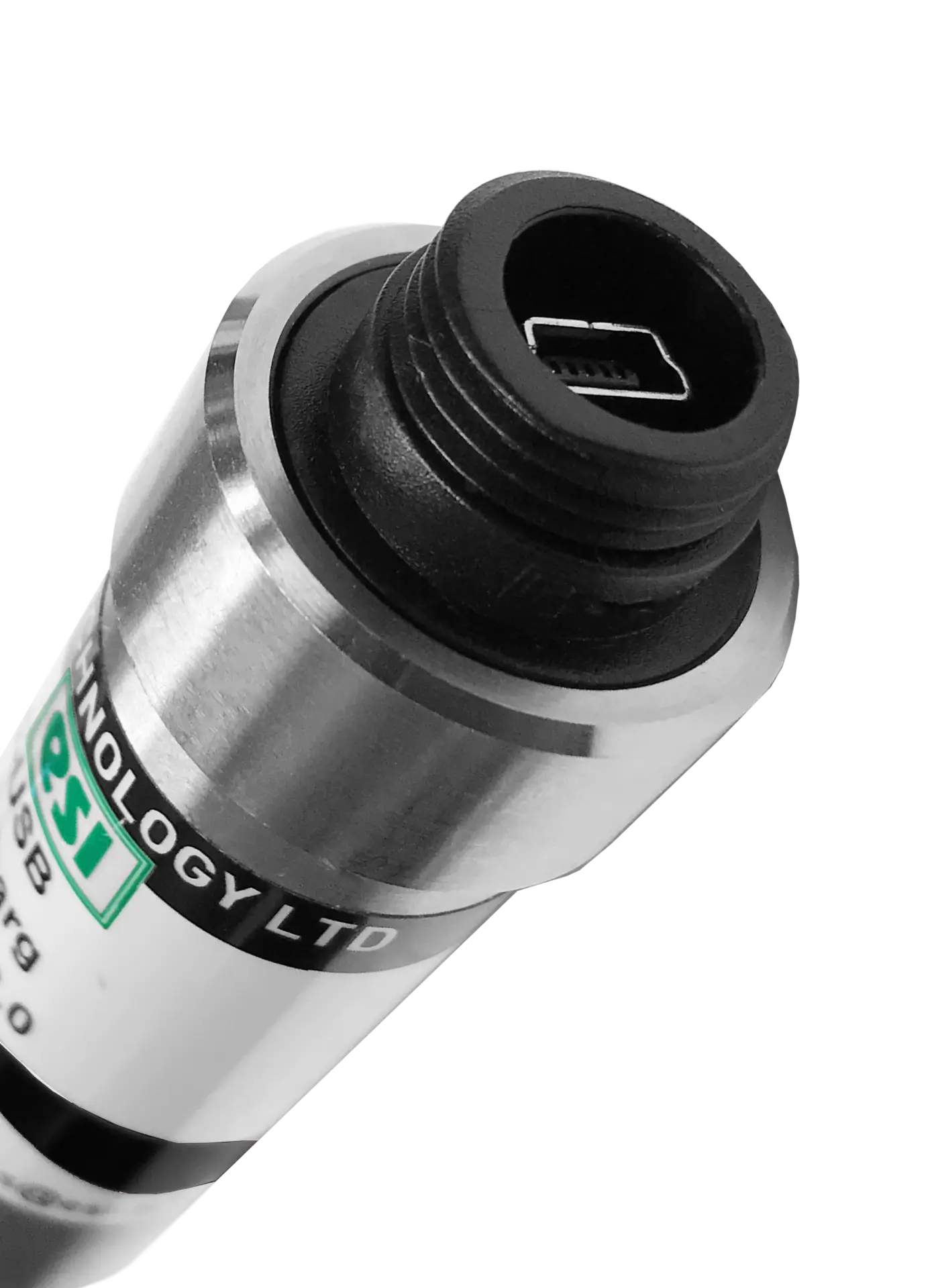
ESI works with customers to specify suitable ranges, materials, process connections and electrical outputs for each location. Options such as USB and digital outputs, RS485 and Modbus communications and integrated displays help integrate pressure data into modern control and monitoring architectures.
Safer hydrocarbon operations with ESI Technology
Hydrocarbon production, processing and transport will always involve risk, but that risk can be managed effectively with the right instrumentation and control systems. By combining robust design, advanced sensor technology and a broad portfolio of approved products, ESI Technology supports safer, more efficient operation across the oil, gas and petrochemical sectors.
By choosing the right pressure transmitters for hydrocarbon applications, operators can gain accurate insight into system behaviour, identify problems early and take action before small deviations escalate. With ESI as a partner, they also benefit from experienced technical support, custom design capability and a commitment to long-term reliability that matches the demanding environments they work in every day.