Our Unit Converter
The ESI Unit converter allows you to quickly and easily access a conversion tool to work out your preferred unit of pressure measurement wherever you may be. Whether out on-site or in the office.

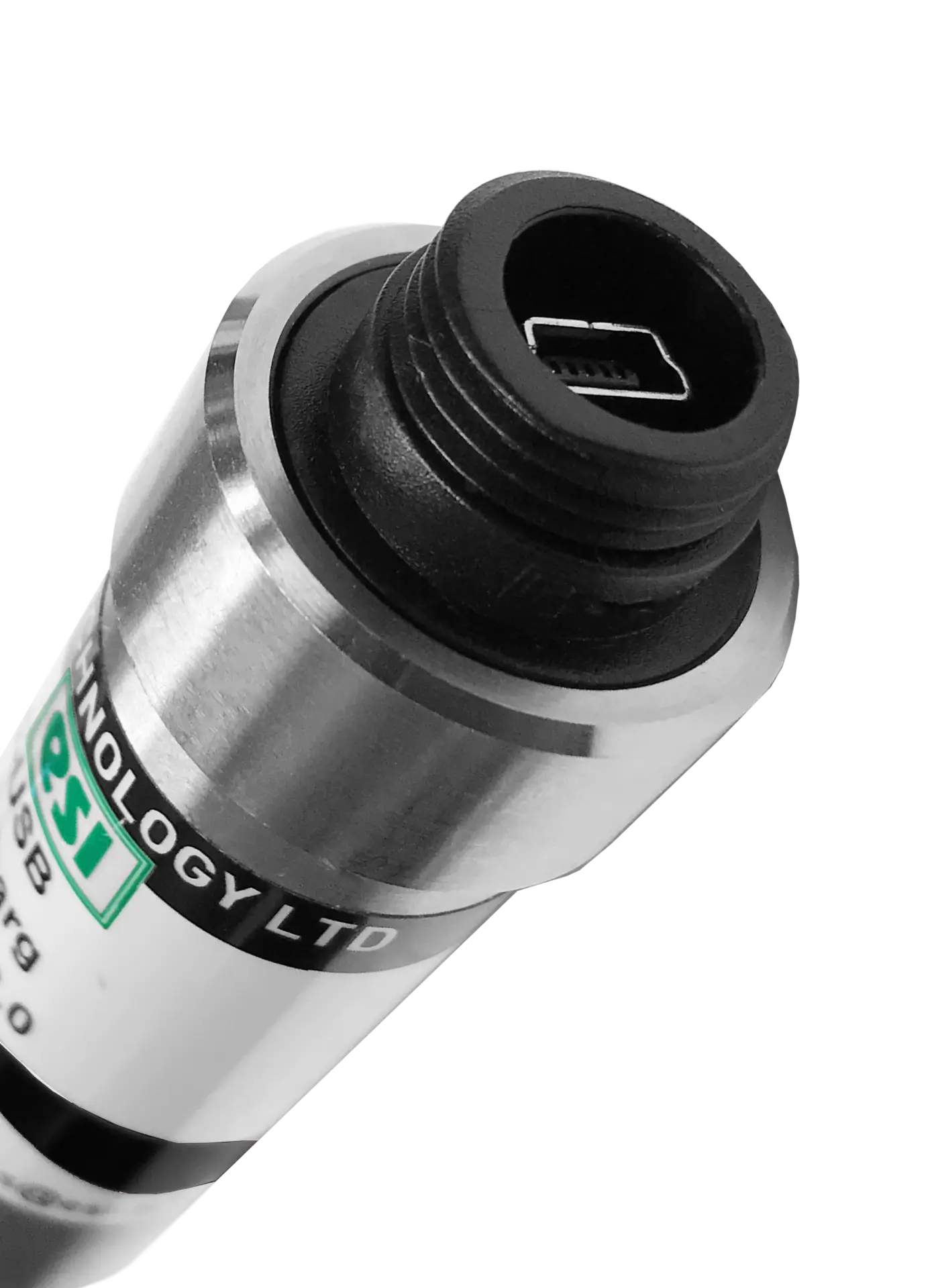
Download the ESI-USB© Software
The ESI-USB© software allows you to connect your ESI transducer to your laptop or PC and be up and running monitoring pressure data within ten minutes. The software auto-updates and is compatible with Windows 8, 10 & 11.
What Does Dual Redundancy Mean and Why Is It Important for Subsea Pressure Measurement?
Subsea pressure measurement comes with a unique challenge. Once equipment is installed underwater, getting to it can be difficult, time-consuming and expensive.
This is particularly true for equipment installed at great depths or on permanent subsea structures. If a pressure transmitter fails, replacing it may require a complex subsea intervention.
For critical applications, engineers may therefore specify dual redundancy.
But what does dual redundancy actually mean? And why is it useful for subsea pressure measurement?
What does dual redundancy mean?
Dual redundancy means that a system has two independent measurement channels instead of one.
In a pressure transmitter, this can mean having two pressure sensors and two sets of electronic signal conditioning within the same assembly.
Both channels measure the same pressure. However, they operate independently.
If one measurement channel develops a fault, the second channel can continue to provide a pressure signal.
This gives the system a built-in back-up.
Single pressure transmitter vs dual redundancy
| Single pressure transmitter | Dual-redundant pressure transmitter |
|---|---|
| One pressure sensor | Two pressure sensors |
| One measurement channel | Two independent measurement channels |
| A sensor failure can result in loss of measurement | One channel can continue if the other fails |
| Replacement may require subsea intervention | The second channel provides a back-up |
| Suitable where one measurement channel is sufficient | Useful where measurement availability is particularly important |
The key word here is independent.
Simply installing two sensing elements does not automatically create true redundancy. For redundancy to be effective, the measurement channels need to be sufficiently independent so that a fault in one does not also disable the other.
ESI’s PR3915 takes this approach by incorporating two independent pressure sensors and electronic circuits within one transmitter.
Why is redundancy important underwater?
Subsea equipment operates in an environment that can be difficult to access.
A pressure transmitter may be installed hundreds or thousands of metres below the surface. It may also be expected to operate continuously for many years.
If the transmitter fails, an engineer cannot simply walk over to the equipment and replace it.
A subsea intervention may require specialist vessels, remotely operated vehicles or other equipment. This can add significant time and cost to maintenance.
For this reason, maintaining pressure measurement can be just as important as achieving measurement accuracy.
Redundancy helps reduce the impact of a single sensor failure.
Instead of losing the measurement completely, the second channel can provide an available pressure signal.
Where can dual redundancy be useful?
Dual-redundant pressure measurement can be useful wherever pressure monitoring is important to the operation of subsea equipment.
This includes applications such as:
- Subsea control valves
- Subsea hydraulic systems
- Valve and actuator monitoring
- Offshore oil and gas equipment
- Subsea production systems
- Manifolds and other permanent subsea installations
The exact requirements will depend on the system design and its safety and control architecture.
For valve-mounted applications in particular, a compact dual-redundant transmitter can provide two measurement channels without needing two separate transmitter housings.
Why put two sensors in one transmitter?
At first, it might seem simpler to install two completely separate pressure transmitters.
However, subsea equipment has limited space.
Valve assemblies and other subsea systems need to accommodate a wide range of components. Size, weight, materials and installation requirements can all be important.
A dual-redundant transmitter can combine two measurement channels within a single compact assembly.
This can reduce the space and materials needed compared with using two separate transmitter housings.
ESI developed the PR3915 with this requirement in mind. It incorporates dual redundancy into a valve-mountable subsea pressure transmitter.
What makes a subsea transmitter suitable for redundancy?
Redundancy is only one part of the design.
A subsea pressure transmitter also needs to withstand the environment around it.
This can include:
- High external pressure
- Seawater exposure
- Corrosion
- Pressure transients
- Long-term immersion
- Temperature changes
- Limited access for maintenance
The mechanical construction therefore plays an important role alongside the sensors and electronics.
For the PR3915, ESI uses a fully welded body and corrosion-resistant wetted materials. The pressure connection is constructed from Inconel 625, while the design provides protection against external pressure at depths of up to 3,000 metres.
Silicon-on-Sapphire technology
The PR3915 also uses ESI’s Silicon-on-Sapphire (SoS) sensor technology.
SoS sensors offer high stability and strong resistance to overpressure and pressure transients. These characteristics are useful in subsea applications, where the pressure environment can be severe.
The sensor technology is only one part of the solution, though. The complete transmitter needs to be designed around the application.
That means considering the sensing element, electronics, housing, pressure connection, seals and electrical interface together.

Introducing the ESI PR3915 Dual Redundant Pressure Transmitter
The PR3915 is a dual-redundant subsea pressure transmitter designed for the subsea oil and gas industry.
It is configured for direct mounting to an industry-standard subsea control valve flange arrangement. Inside the transmitter are two independent pressure sensors and electronic circuits, providing two separate measurement channels in one compact assembly.
Key PR3915 features
- Dual independent pressure sensors and electronics
- Silicon-on-Sapphire sensor technology
- Pressure ranges available up to 1,000 bar
- Submersion to 3,000 metres
- Hyperbaric testing available to 3,300 metres
- High accuracy option
- Fully welded construction
- NACE-compliant wetted materials
- Inconel 625 pressure connection
- Environmental Stress Screening (ESS) available
- ATEX and IECEx options available
- Designed for permanent subsea installation
The PR3915 is also designed for long-term subsea operation. Its construction and testing options help engineers assess the transmitter before it is installed in an environment where access may be difficult.
What is “true” dual redundancy?
There is an important distinction between two sensors and true dual redundancy.
If both sensors depend on the same electronic circuit, power supply or other common component, a single fault could potentially affect both measurement channels.
ESI has developed a version of the PR3915 that it describes as “true dual redundant”.
In this design, the two pressure transmitters are effectively separate systems within one robust outer housing. They have separate sensors, signal conditioning and deep-sea electrical connections. The sensor and electronic signal paths are isolated from one another.
This approach is particularly useful when continued pressure measurement is important and access to the equipment is difficult.
Redundancy does not mean two readings are always identical
It is also worth remembering that two independent measurement channels may not produce exactly the same reading.
Each sensor has its own measurement characteristics and tolerances. The system designer therefore needs to consider accuracy, calibration, signal conditioning and how the control system will use the two signals.
Redundancy is primarily about maintaining measurement availability if one channel develops a fault. It is not simply about producing two identical readings.
A compact solution for critical subsea measurement
For subsea equipment, reliability has to be considered from the start of the design process.
The cost and complexity of accessing equipment at depth can make a single failed pressure sensor more than a simple maintenance issue.
Dual redundancy provides another option.
By incorporating two independent pressure measurement channels into one transmitter, the PR3915 provides a compact solution where continued pressure measurement is important.
Combined with Silicon-on-Sapphire sensing technology, robust construction and subsea testing, it has been designed specifically for long-term pressure measurement in subsea environments.
PR3915 Dual Redundant Subsea Pressure Transmitter
The ESI PR3915 brings two independent pressure measurement channels together in a single valve-mountable subsea transmitter.
For applications where access is difficult and measurement availability matters, dual redundancy can provide an additional layer of protection against a single sensor failure.
Need a dual-redundant pressure measurement solution for a subsea application?
ESI Technology can work with you to develop a pressure transmitter around your required pressure range, installation, depth and operating conditions. Contact sales for more information or a quote [email protected] +44(0)1978 262255 or find your nearest distributor here