Our Unit Converter
The ESI Unit converter allows you to quickly and easily access a conversion tool to work out your preferred unit of pressure measurement wherever you may be. Whether out on-site or in the office.

Download the ESI-USB© Software
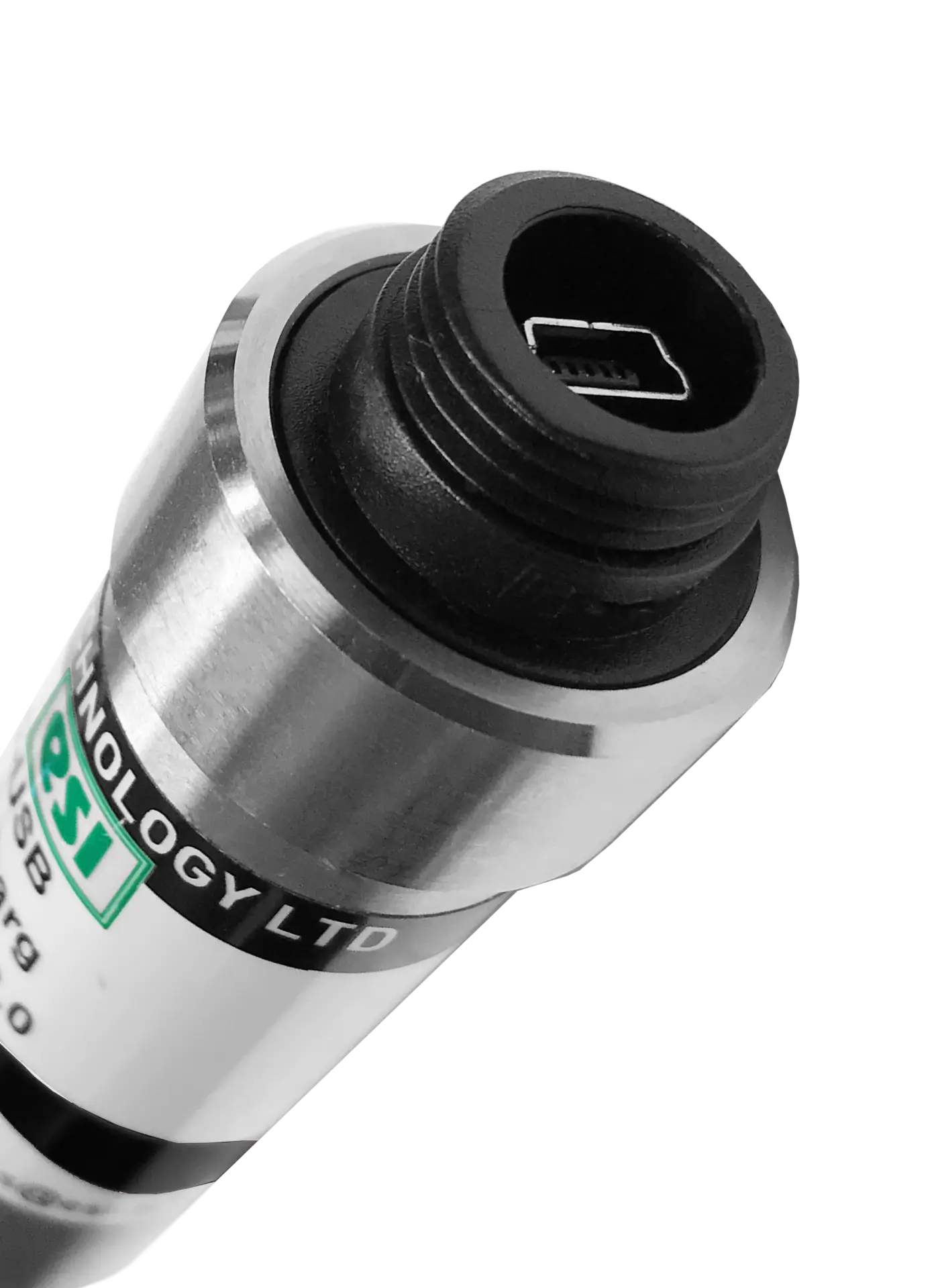
The ESI-USB© software allows you to connect your ESI transducer to your laptop or PC and be up and running monitoring pressure data within ten minutes. The software auto-updates and is compatible with Windows 8, 10 & 11.
Aerospace Pressure Transmitters: How Silicon-on-Sapphire Technology Improves Flight-Critical Reliability
In modern aircraft and space systems, reliable pressure measurement underpins everything from fuel management to braking and environmental control. Aerospace pressure transmitters provide the real-time data that flight crews and control systems rely on to keep missions safe, efficient and on schedule, so choosing the right technology is critical.
Why aerospace pressure transmitters matter for flight safety
Every phase of flight depends on accurate pressure information. Hydraulic systems power landing gear, flight controls and brakes, while fuel systems must maintain the correct pressures to feed engines cleanly and efficiently. Environmental control systems regulate cabin pressure and temperature for passenger comfort and crew safety. If any of these systems receive poor-quality or unstable pressure data, the result can be increased wear, unnecessary maintenance and, in the worst case, safety risks.
Traditional pressure sensors can struggle in aerospace environments. Large temperature swings, vibration, shock loads and limited space all place additional stress on the sensing element. Over time, this can lead to drift, reduced accuracy and unexpected failures. Engineers therefore look for sensing technologies that offer long-term stability and reliability in harsh conditions, without adding unnecessary weight or complexity.
How Silicon-on-Sapphire strengthens aerospace pressure transmitters
Silicon-on-Sapphire is an advanced sensing technology that combines a silicon strain gauge with a sapphire substrate. Sapphire is an extremely hard, stable and chemically inert material, and when it is bonded to a titanium diaphragm it creates a very robust sensor structure. The mechanical strength and excellent insulation properties of sapphire help the sensor cope with high stress and temperature without suffering from the ageing effects that affect more conventional designs.
For aerospace applications, this brings several important benefits. The sensor output remains stable across a wide temperature range, reducing drift and the need for frequent recalibration. Low hysteresis and excellent linearity improve measurement accuracy, which supports more precise control of hydraulic and fuel systems. The robust construction also helps the transmitter withstand vibration and mechanical shock, such as those experienced during take-off, landing and demanding manoeuvres.
Because Silicon-on-Sapphire sensors can maintain performance at elevated temperatures, they can be installed closer to hot zones around engines, auxiliary power units or bleed air systems. This allows designers to shorten pipe runs, reduce the number of fittings and minimise potential leak points, improving both safety and efficiency.
Designing aerospace pressure transmitters for harsh environments
Aerospace systems expose instrumentation to conditions that would quickly damage standard industrial devices. Temperatures can vary from sub-zero at high altitude to very high levels in engine bays and test cells. Pressures may be low and finely controlled, as in cabin systems, or extremely high in hydraulic circuits. Vibration, shock and rapid changes in load are all part of normal operation.
To perform reliably in these environments, specialist transmitters must combine a rugged mechanical design with a carefully engineered sensing element. Materials such as titanium provide excellent strength-to-weight ratios and corrosion resistance when exposed to hydraulic fluids, fuels and de-icing chemicals. All-welded constructions eliminate potential leak paths and help the transmitter withstand thermal cycling over long service lives.
Silicon-on-Sapphire technology complements these mechanical features by delivering stable, repeatable measurements despite constant temperature change and mechanical stress. The result is a device that continues to provide dependable data in locations where maintenance access is difficult and unscheduled downtime is costly.
Development and test applications in aerospace systems
Before a new aircraft system ever flies, it must prove itself on the ground. Test cells, rigs and prototype installations all depend on accurate pressure measurement to validate designs and demonstrate compliance with regulatory requirements. In these environments, instrumentation is often pushed to its limits as engineers explore the edges of the operating envelope.
Using Silicon-on-Sapphire based transmitters in development and test brings clear advantages. Their stability over time means test data remains consistent across long campaigns, making it easier to compare results and spot genuine trends rather than sensor drift. High accuracy and fast response support detailed analysis of transient events, such as rapid valve movements or pressure spikes, helping engineers refine control strategies and improve component durability.
When the same sensing technology is used in both development rigs and the final aircraft or spacecraft, engineers gain confidence that the behaviour seen during testing will closely match performance in service. This continuity reduces risk and helps shorten the time from design to deployment.
Partnering with ESI Technology for reliable pressure measurement
Partnering with ESI Technology for reliable pressure measurement
Selecting and integrating pressure instrumentation for aerospace programmes is never a simple, off-the-shelf task. Every aircraft system brings its own mix of operating pressures, temperature extremes, media compatibility requirements and tight spatial constraints. ESI Technology designs and manufactures pressure transmitters entirely in-house, drawing on decades of expertise with Silicon-on-Sapphire sensing technology and a long history of supporting demanding aerospace applications.
As an AS9100D-certified manufacturer, ESI operates to one of the most widely recognised quality management standards in the global aerospace industry. This certification reinforces our commitment to full traceability, process control and product reliability—key factors for any organisation working on flight-critical equipment. It also gives programme managers and procurement teams the confidence that every stage of design, production and testing is carried out under a robust and consistently audited quality framework.
By working collaboratively with our customers, we help define pressure ranges, output signals, process connections and electrical interfaces that integrate seamlessly into both new developments and established platforms. Our disciplined manufacturing and validation procedures, supported by our AS9100D quality system and other industry certifications, provide the reassurance required when operating in safety-critical environments.
For engineers looking to maximise reliability, reduce maintenance burdens and enhance data quality, Silicon-on-Sapphire-based aerospace pressure transmitters offer a powerful and proven solution. To discuss your requirements and explore how this technology—combined with ESI’s certified aerospace manufacturing capability—can support your next project, get in touch with the team at ESI Technology.