Our Unit Converter
The ESI Unit converter allows you to quickly and easily access a conversion tool to work out your preferred unit of pressure measurement wherever you may be. Whether out on-site or in the office.

Download the ESI-USB© Software
The ESI-USB© software allows you to connect your ESI transducer to your laptop or PC and be up and running monitoring pressure data within ten minutes. The software auto-updates and is compatible with Windows 8, 10 & 11.
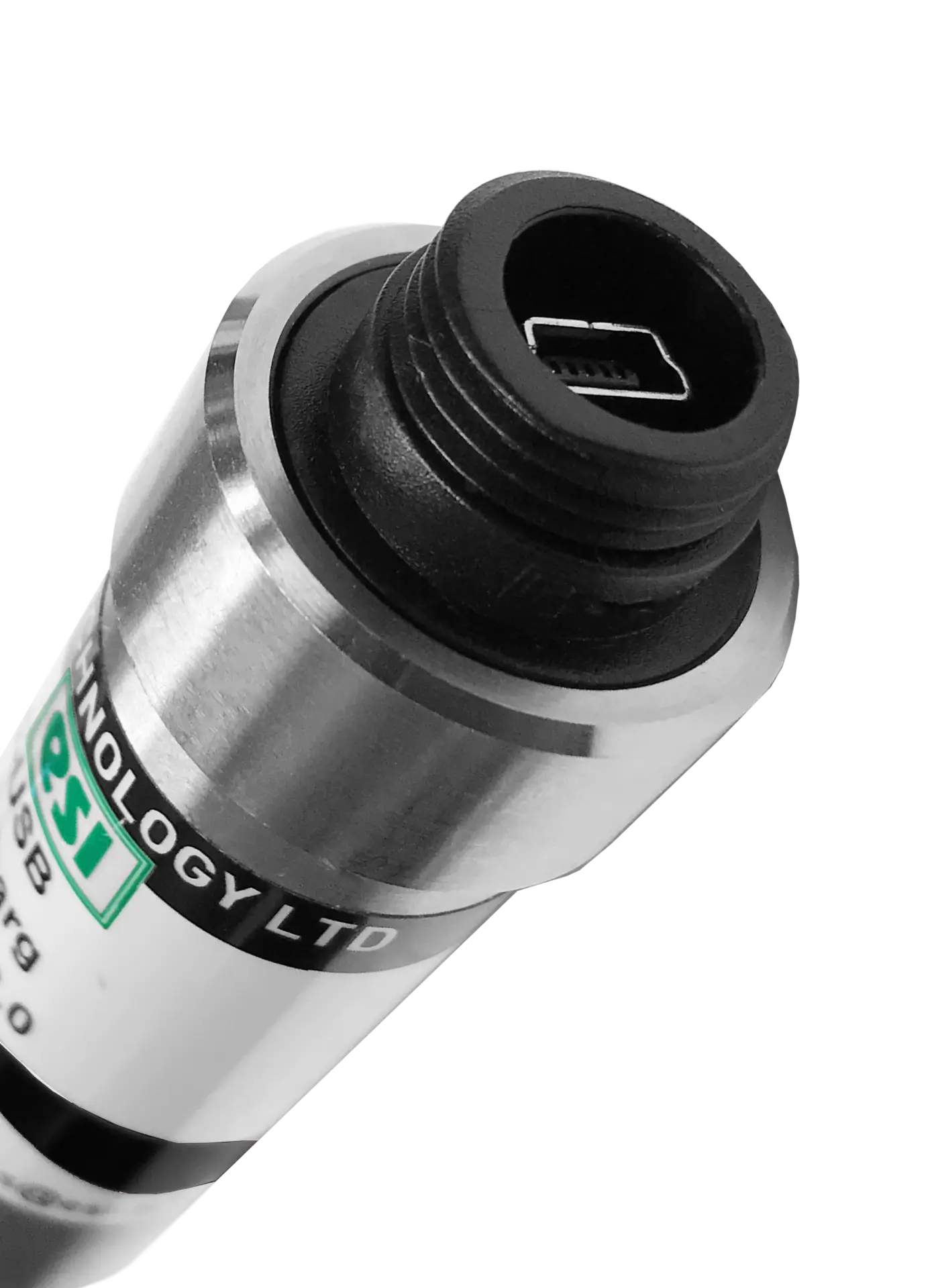
Downhole Pressure Transducers: What You Need to Know
In the demanding world of oil, gas, and geothermal energy, reliable and accurate measurement is paramount. The environment deep beneath the earth’s surface – known as the downhole – is characterised by extreme temperatures, immense pressures, and highly corrosive media. To monitor and manage these crucial subterranean operations effectively, specialised tools are required. Chief among these is the downhole pressure transducer.
What Exactly is a Downhole Pressure Transducer?
A pressure transducer is an electronic device that converts pressure into an electrical signal. A downhole pressure transducer is specifically engineered to operate within the exceptionally harsh conditions encountered in boreholes, wells, and geological formations. Its primary function is to provide real-time, highly accurate pressure data from deep within the well.
This data is vital for several critical operations, including:
-
Reservoir Monitoring: Understanding the pressure profile of the reservoir allows engineers to assess its health, estimate remaining reserves, and optimise extraction strategies.
-
Well Integrity: Monitoring pressure changes can detect leaks or failures in the well casing, ensuring safety and preventing environmental damage.
-
Drilling and Completion: Real-time pressure feedback guides the safe and efficient execution of drilling, fracking, and completion activities.
The Challenge of the Downhole Environment
The typical downhole environment presents a significant engineering challenge for any electronic device. The conditions that a standard industrial sensor simply couldn’t handle include:
-
Extreme High Pressure: Pressures can easily exceed 1,500 bar and, in some cases, reach up to 2,000 bar.
-
High Temperature: Temperatures can soar, often demanding sensors capable of withstanding excessive temperatures.
-
Corrosive Media: The presence of hydrogen sulfide, carbon dioxide, and various chlorides necessitates materials that are highly resistant to corrosion. This often mandates the use of materials certified under standards like NACE (National Association of Corrosion Engineers).
-
Shock and Vibration: Drilling and downhole movements subject the equipment to high levels of mechanical stress.
Without a robust and stable sensor, the data collected in these conditions would be inaccurate, leading to poor decision-making and potentially costly or dangerous errors.
The ESI Solution: Silicon-on-Sapphire Technology
To meet these demanding requirements, ESI Technology employs advanced sensor technology, exemplified by the HI5000 downhole pressure transducer. This device utilises Silicon-on-Sapphire (SoS) sensing technology, which provides exceptional stability and performance in extreme conditions.
Why Silicon-on-Sapphire Stands Out:
-
Exceptional Stability: The SoS design involves growing a piezoresistive silicon strain gauge circuit epitaxially onto a sapphire diaphragm. Sapphire is an incredibly hard, inert material with superb insulating properties. This crystalline structure delivers virtually no hysteresis (a lag in response) and excellent long-term stability across wide temperature ranges.
-
High Temperature and Shock Resistance: The robust nature of the sapphire element and its molecular bond to a titanium alloy sub-diaphragm allows the sensor to withstand high shock and vibration inputs while maintaining accuracy in high-temperature applications up to 200 degrees Celsius.
-
Superior Corrosion Resistance: The use of NACE-certified, corrosion-resistant materials for the housing and the inherent properties of the sapphire sensor ensure the downhole pressure transducer can endure contact with harsh, corrosive fluids for prolonged periods.
-
All-Welded Construction: The HI5000 features an all-welded and sealed construction. This compact design minimises potential leak paths and ensures the internal electronics are completely protected from the corrosive and high-pressure environment. With a maximum length of just 57mm, it is highly compact for easy installation.
Key Features to Look for in a Downhole Pressure Transducer
When selecting a sensor for your critical downhole application, focus on these essential characteristics:
| Feature | Importance | ESI HI5000 Capability |
| Sensor Technology | Must maintain stability and accuracy at high temperatures. | Silicon-on-Sapphire for outstanding stability. |
| Pressure Range | Must cover the expected well pressure. | Available up to 2,000 bar. |
| Temperature Range | Must tolerate the maximum expected well temperature. | Rated for high temperature up to 200 degrees Celsius. |
| Corrosion Resistance | Essential for long-term survival. | NACE certified materials and all-welded construction. |
| Physical Size | Must be compact for ease of installation. | Highly compact design, max 57mm length. |
Typical Applications
A reliable downhole pressure transducer like the HI5000 is indispensable across various energy sectors:
-
Oil and Gas: Monitoring annular pressure, production zones, and injection pressures in conventional and unconventional wells.
-
Geothermal: Measuring pressure and temperature in geothermal reservoirs for energy production efficiency.
-
Subsea: Used in subsea tooling and control systems where high pressure and reliability are non-negotiable.
Conclusion
The data provided by a high-quality downhole pressure transducer is the bedrock of safe, efficient, and profitable subterranean operations. Given the significant costs and risks involved in drilling and well management, investing in a transducer with proven stability, such as one featuring Silicon-on-Sapphire technology, is a necessity. The ESI HI5000 delivers on this need, offering a compact, tough, and supremely stable solution that provides the accurate, long-term performance required by the oil, gas, and geothermal industries. If you’d like to find out more about pressure transducers, take a look at our website or get in touch.